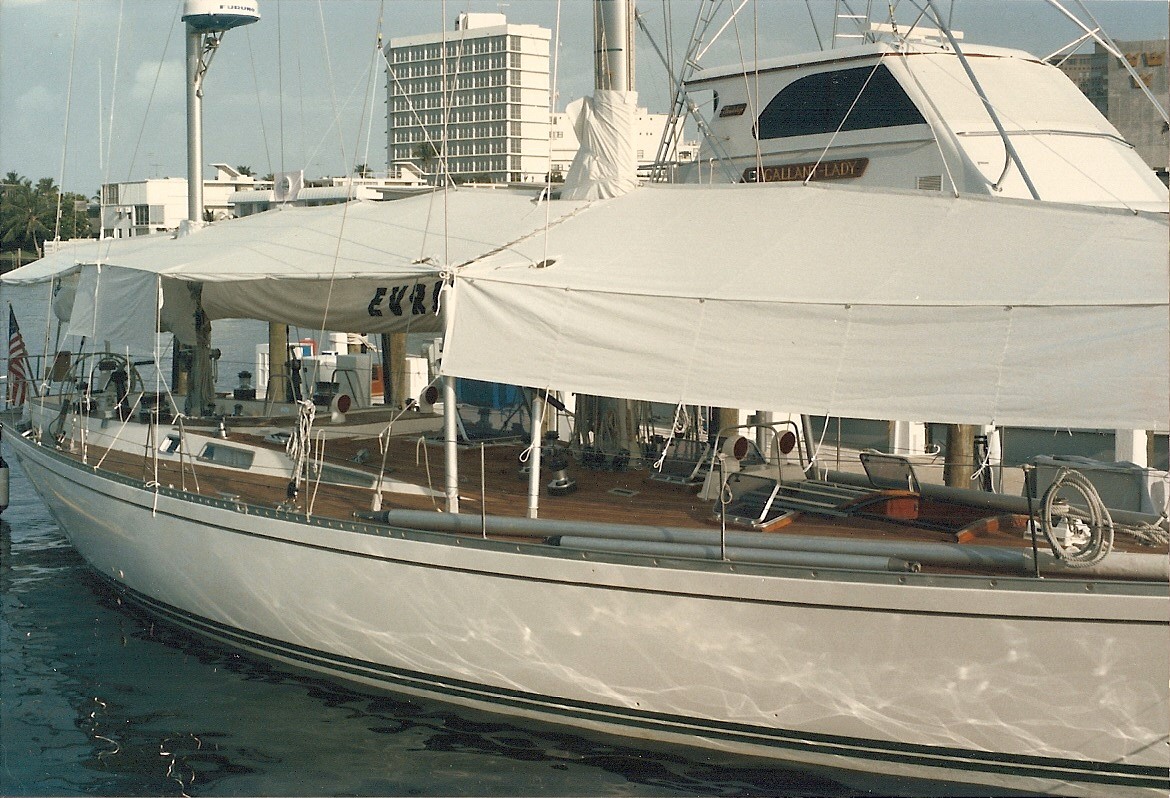
It's not hard to envision what a maniac I must have been every time I saw a single bird land on the spreaders of this boat. I am hoping the white Sunbrella wasn't my idea. I really like the look of them so it could have been me. Made In The Shade in Ft. Lauderdale built them along with the sail covers. The object was to save the teak decks from the intense south Florida sun and the polluted rain. The picture below shows 3 major maintenance points on that boat that kept a person busy. The topsides, the decks and the awnings. You're not going to just leave town for a few days with this setup.
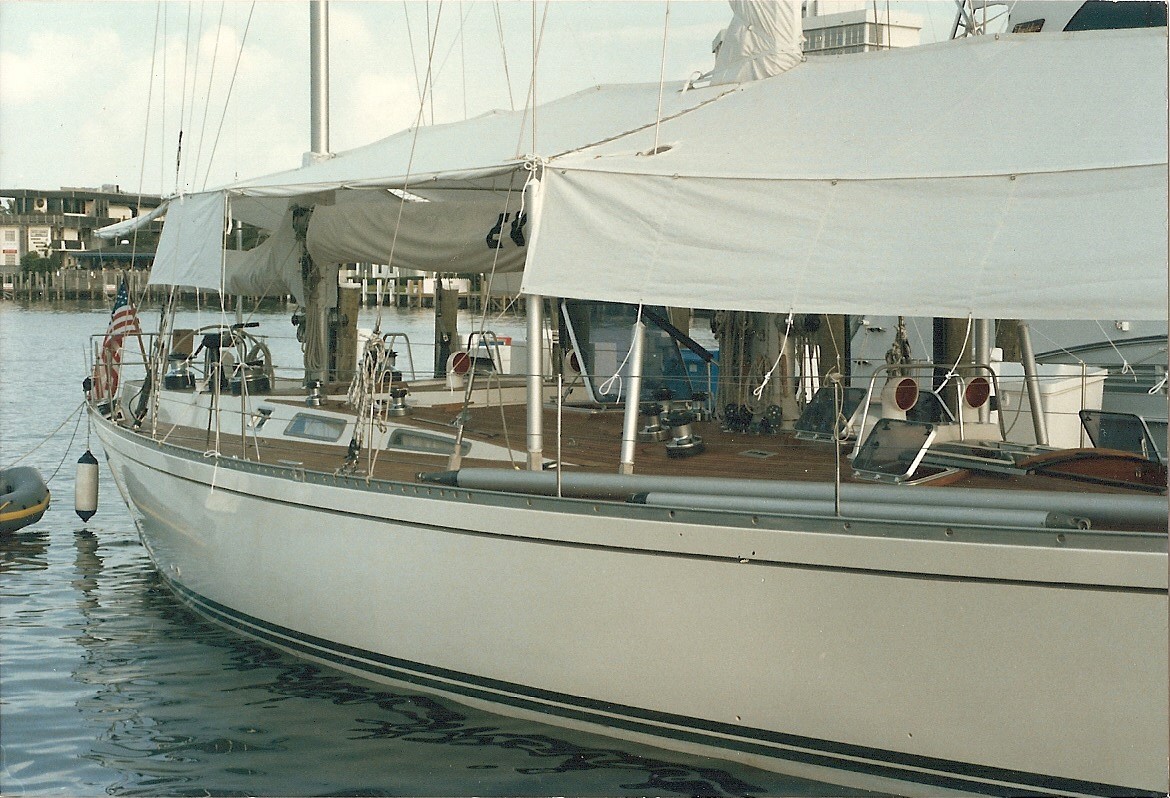
I will start with the topsides. The surface from the gunnel down to the waterline. See all those holes along the toerail? They are super handy to attach a snatch block anyplace that you might need one. Great for when you are at sea but terrible in this case because the picture was taken (by me) when the boat was in Ft. Lauderdale at Bahia Mar. The airport is not very far away. The rains can be really dirty. Rainwater would shed off the deck and out through the holes in the toe rail. This left black zebra stripes down the entire length of the hull that got darker and darker if you didn't do something about it. I used Collinite wax as protection but I spent many evenings in the inflatable with an absorber drying the rain before it had a chance to burn into the wax. We are talking 130' by the time you do both sides.
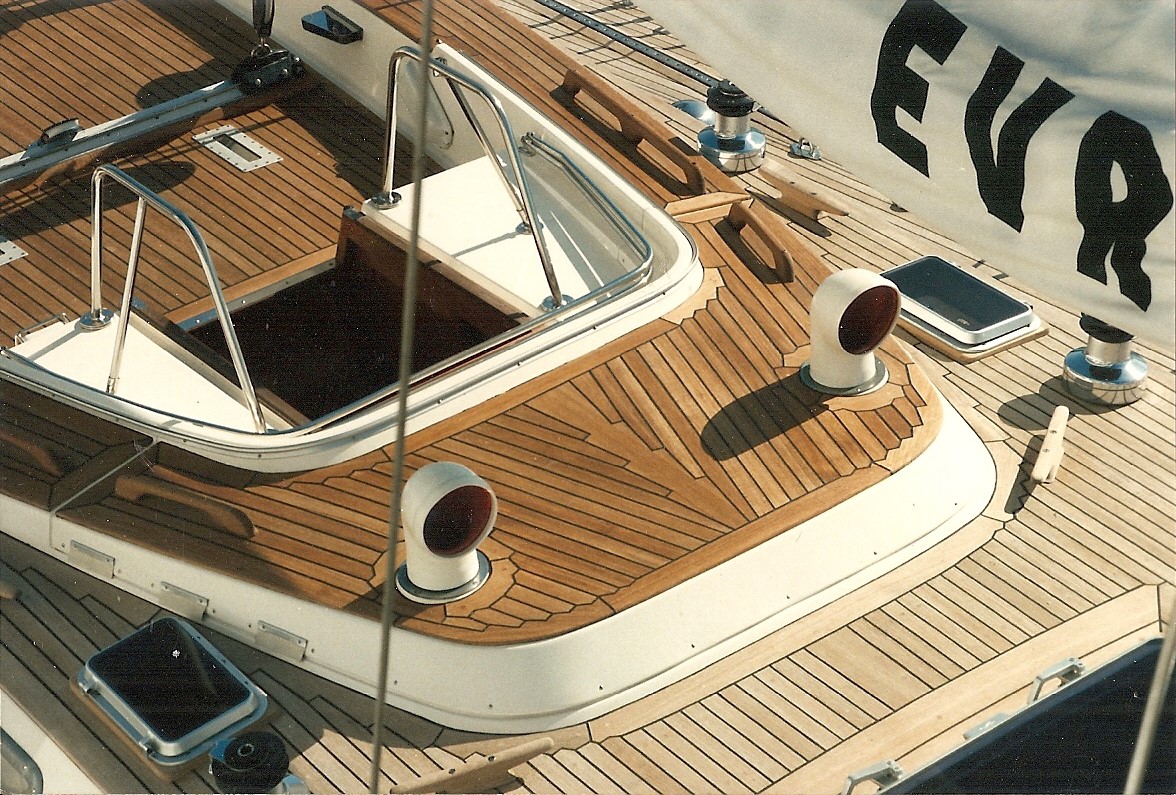
Next up are the teak decks. Sometimes I would refer to them as "my world". The best life for teak decks is to remain at sea. Every few days you splash them with salt water and gently brush them across the wood grain. They can last a long time in that environment. Eventually the softer grain gets washed away and makes little valleys if you could see a cross section through a microscope. Fresh water sits in those low spots and forms mold (or is it mildew) so the decks get darker and darker. The process of restoring them is labor intensive and harsh on everything (including the environment). It takes at least 3 people with one person whose duty is keeping everything wet at all times. There was a 3 part product sold by a guy that we all called Dr. King. He was a retired Dupont chemist and had a monopoly on deck treatments at that time. All the Feadship captains used him and then it trickled down to smaller boats with teak decks. Part A was a strong acid. It was lightly brushed on against the grain and made almost a mud during the application. The water person had to constantly rinse any anodized aluminum or other non-wood surfaces before the acid damaged their finish. Part 2 turned the decks a beautiful golden brown color and got rid of the mud. The third product was called Lestrain and it was a fine smelling thorough wash that got rid of any remaining chemicals. The harsh Part 1 would soften the mastic. Mastic is the rubbery black caulking between the narrow teak planks that allows the wood to shrink and swell. Of course more punky grain would get scrubbed away and sometimes a light sanding with a belt sander was needed to get things flush again. Unfortunately sanding would thin out the bungs. Bungs are the wood plugs that cover up the deck fasteners. You could tell they were thin because they were the last wood to dry after wetting the decks. Now you have to pry out the bung, back out the screw, drill out a little wood under the fastener to make a deeper seat, screw the fastener back in, glue in a new bung, chisel the bung flush with the deck and then you could move on to the next one. You can see how important it is to protect the decks and space out this process. When I knew I wasn't scheduled to move the boat I would oil them and dry them with the absorber almost every time they were wet. Salt water splotches on oiled decks so plain decks for passagemaking and oiled decks to protect them in port. That is what I got paid to do. A glamorous job for sure. This picture was my attempt to leave the high usage areas oiled and the rest stayed raw. This picture was a few days after a passage from Antibes to Athens. Not the best they can look but overall decent.
And now the awnings. A well built awning was worth it's weight in gold. We had a blue set before this one and I learned a lot about design. The pitch is very important. Build them steep and they don't stand up to big winds. Build them flat and risk having water pool before it sheds requiring you to poke the standing water to get it over the low edge of the awning. Summers down there can bring daily rain squalls and sometimes you have to guess whether it was going to be 15-20 knots or one of those 40 knot stinkers. These are 3 piece awnings laced together with light line. It took a long time to get them up and down. The ridge had to be tensioned very tight to get such a shallow awning to shed water. I got really good at putting them up and down. I did get caught a few times in 35-40 and they held up. White awnings hate dirty rain too so frequent washdowns were needed. Sometimes there was a mate on the payroll but often not. Day workers with a little experience were available if it was time to restore the decks.
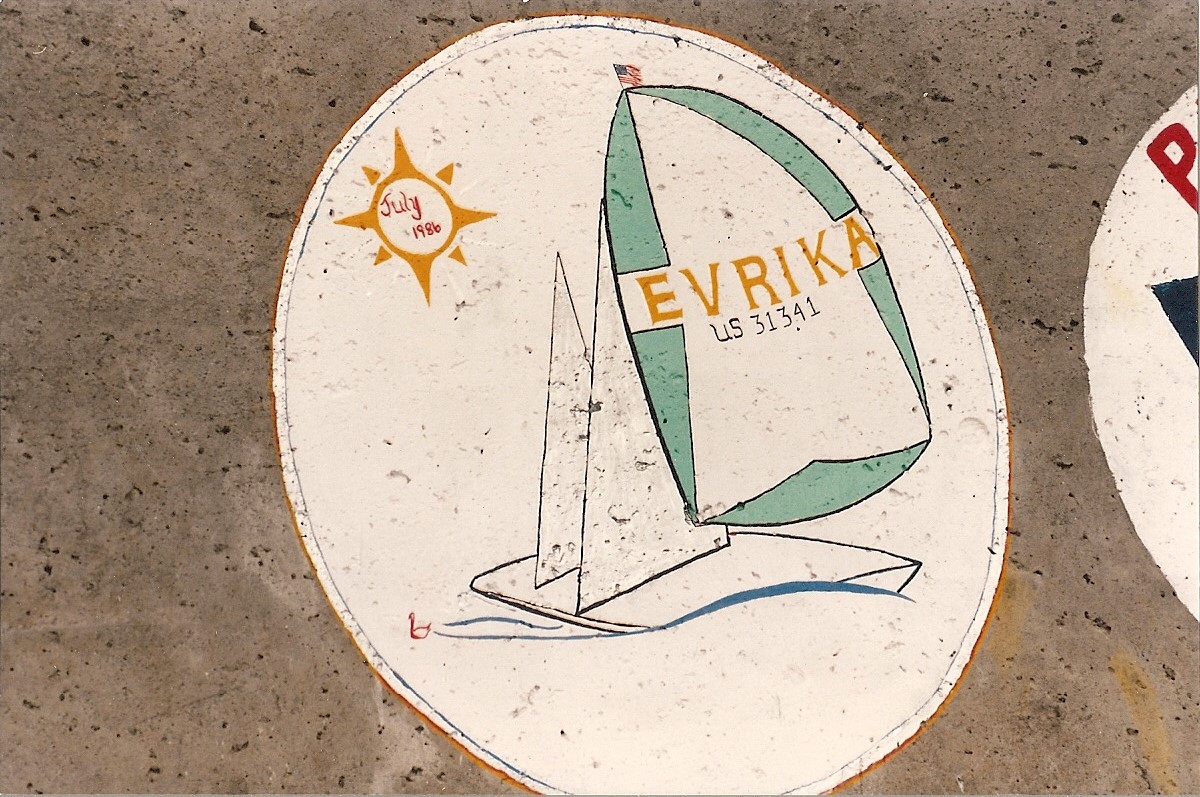
This picture was in the Azores on my first Atlantic crossing on Evrika. I was an unpaid deckhand. July of 1986. Hard to believe we are talking 40 years ago.
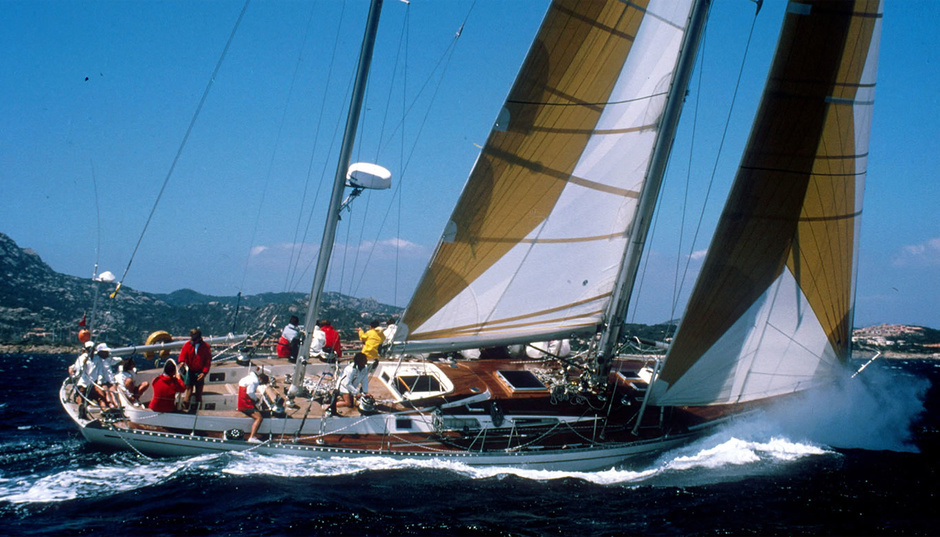
My favorite picture that I have posted in the past. The Swan Worlds in Sardinia. We didn't use the mizzen to get a more favorable rating.